So, you’ve finally decided to tick Vietnam off your bucket list? Great choice! You’re in for a whirlwind of sizzling street food, chaotic motorbikes, and views that look like they’ve been filtered by Instagram in real life. But here’s the million-dollar question: when to visit Vietnam?
Unlike smaller tropical countries, Vietnam is a long, skinny beast stretching over 1,600 kilometers. This means while you’re sunbathing on a beach in the south, your friends in the north might be shivering in a mountain mist. To help you avoid becoming a human popsicle or a melted puddle, we’ve put together this local-insider guide on the best time to pack your bags.
When to visit Vietnam
To figure out when to visit Vietnam, you first have to understand that the country is split into three distinct weather zones.
1. Northern Vietnam (Hanoi, Sapa, Halong Bay, Ha Giang)
The North is the only region with four true seasons.
- Best Time: March to April (Spring) or October to November (Autumn).
- The Local Secret: If you want to see the legendary buckwheat flowers in Ha Giang, go in November. If you want to see the rice terraces of Sapa turning a brilliant gold, late September is your golden ticket.
- Fair Warning: January and February in Hanoi can be “damp cold.” It’s a bone-chilling humidity that makes 10°C feel like 0°C. Don’t forget a jacket!

Halong Bay
2. Central Vietnam (Hue, Da Nang, Hoi An, Nha Trang)
This region is the trickiest part of the puzzle when deciding when to visit Vietnam.
- Best Time: January to August. This is when you’ll get those crystal-clear blue skies in Da Nang and Hoi An.
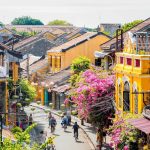
- The Monsoon Reality: From October to December, Central Vietnam gets hit with heavy rains and occasional typhoons. Hoi An often floods during this time. While wading through the Old Town on a wooden boat is a “unique” experience, it might not be the vibe you’re looking for.

Hoi An old town
3. Southern Vietnam (Ho Chi Minh City, Mekong Delta, Phu Quoc)
The South is basically “Summer” and “Extra Summer.”
- Best Time: November to April (Dry Season). The humidity is manageable, and the skies are bright.
- The “Rainy” Myth: People often ask when to visit Vietnam to avoid the rain. In the South, the rainy season (May to October) usually just means a massive 30-minute downpour in the afternoon. It’s actually quite refreshing and keeps the dust down!

Mekong Delta
When to Visit Vietnam for the Golden Rice Fields
If your main goal is to capture those iconic tiered rice paddies, timing is everything. You can’t just show up anytime!
- The Watering Season (May – June): This is when the terraces look like giant mirrors reflecting the sky. It’s a photographer’s dream.
- The Golden Season (September – early October): This is the peak. The mountains turn a shimmering yellow as the rice ripens. If you are wondering when to visit Vietnam for the most breathtaking landscapes, this is it.

Golden rice field in Sapa
For Vietnam’s golden rice fields, head to the Northwest (Mu Cang Chai, Hoang Su Phi, Sapa, Y Ty) in September/October, or consider Tam Coc/Ninh Binh (mid-April to June).
When to Visit Vietnam for Festivals and Culture
If culture matters more than weather, timing changes.
- Tet Holiday (January or February): Vietnamese New Year is the biggest celebration of the year. Cities slow down. Families travel home. Streets feel quiet but meaningful. It’s a unique time to visit Vietnam, but not ideal for tight schedules.
- Mid Autumn Festival (September): Lanterns fill old towns like Hoi An. Kids parade the streets. Mooncakes appear everywhere. This is a beautiful answer to when to visit Vietnam for the atmosphere.
- Hue Festival and Local Events: Held every two years, Hue Festival brings performances, night lights, and restored royal traditions. Smaller regional festivals happen year round if you know where to look.

Vietnam during Tet holidays
When to Visit Vietnam for Beaches
For beach-focused trips, timing matters even more.
- Phu Quoc is best from November to April, with calm seas and clear sunsets.
- Da Nang and Hoi An beaches shine from March to August.
- Con Dao feels most peaceful from February to June.
If beaches are the priority, this often defines when to visit Vietnam more than anything else.
When to Visit Vietnam on a Budget
Low season travel has real benefits.
- May, June, and September offer better hotel rates and fewer tour groups. Rain exists, but it’s manageable with smart planning.
- Locals travel during these months too, just with flexible schedules. If you enjoy quieter streets and spontaneous plans, this could be the best time to visit Vietnam for you.
Planning a trip across three climate zones can be a logistical headache. Why not let the experts handle the timing for you? At Asiaplus Tours, we specialize in crafting authentic, local-led experiences that show you the heart of our country, regardless of the season. Contact us today for easy Vietnam tours!